YOUR POWERHOUSE FOR DIGITAL MARKETING SOLUTIONS (AUGUST)
CONTENTS

How Marketers Can Respond to Price Concerns
Digital River’s research shows that consumers are feeling price-conscious given inflation.
Sixty-four percent say they want help from retailers to deal with inflation. How should retailers respond?
Fifty-four percent of consumers say they’ll be shopping online more.

What does this suggest about the stability of the post-COVID ascent of ecommerce?
The fact is, while ecommerce has seen exponential growth since it first burst onto the scene, the pandemic turned it from an occasional habit to an everyday practice.
The rumored recession will be a litmus test for the space it occupies in an unstable economy, but new habits aren’t easily broken. Consumers know that they can reliably and conveniently buy essential products online, and a recession may not change that.
How can retailers encourage consumers to choose them during the holiday season?
In times like these when the state of the economy is in flux, consumers will naturally be more selective in their shopping decisions and rein in unnecessary spending. That means that consumer attention, to an even greater degree, will need to be earned.
The ecommerce stores that find the most success in tough times need more than just quality products; they need to deliver an experience that removes stress from the purchasing equation instead of adding it.
Secure checkouts, a variety of payment and shipping options, and agreeable storefronts are all necessities, but those that can master the nuances of selling online will set themselves apart in a competitive market.
How do pricing and messaging complement each other as marketing tactics to drive gains during a recession?
Pricing and messaging are individual variables in the larger marketing equation, and dissonance between the two could scare customers off.
If a brand needs to make a price hike, transparency is the best policy, as it demonstrates an effort to foster customer understanding.
Next, centralize personally identifiable information (PII) data into a first-party ID graph. Collecting permissioned data is only the first step; the real power comes when brands can build a first-party ID graph that synthesizes the best available PII from across all consumer touchpoints. This requires a customer data platform (CDP) that can handle messy and multi-sourced PII at a massive scale
Finally, build a comprehensive and rich customer database. With the data in one place and identities resolved, brands should develop and maintain persistent customer profiles that can serve as the basis for analytics and personalization for teams across the organization.

In reality, these tools, as great as they are, are dependent on a unified and nourished view of the customer. No matter how much you invest in cutting-edge technologies, they’re only as good as the data you feed them. You have to solve the underlying data gap before you can rely on tools. With the right foundation in place, companies can trust that their first-party data is accurate and available to serve the teams and tools that need it to power positive customer experiences.
Why should brands identify their customer database as an asset for funding or M&A?
In today’s uncertain economy, businesses are tightening their belts, shareholders are maintaining a watchful eye on operations, and investors are scrutinizing every investment before committing to funding. In that environment, it’s especially important to calculate a company’s valuation beyond revenue growth, profitability, and the total addressable market.
Customer data is an often-overlooked metric that can help investors understand a company’s true worth. Because many companies are still product led, and looking at traditional business metrics without a customer lens, they neglect to include this powerful — and incredibly valuable — dataset as part of their assets or valuation.
Whether it be for funding or mergers and acquisitions, brands should embrace their customer data as a key component of their company value.
What cutting-edge technologies, for example AI/ML, are affecting customer data-driven marketing?
Companies have long chased the elusive Holy Grail: the unified view of the customer. They’ve tried everything from match merge rules to ETL to data lakes, but each of those tools are inefficient, difficult to build, and democratize access to once built.
Fortunately, new technology has become available in just the past couple years. Advances in artificial intelligence and machine learning are now taking advantage of cheaper cloud computing costs and out-of-the-box integration capabilities to manage massive datasets at scale.
That being said, many companies are stuck on the tools carousel, bombarded with options that claim better ways to manage events or build emails. But do they deliver?

Yahoo Partners with Lowe’s to Power Off-Site Media Experiences for Advertisers

This isn’t the first partnership of its kind for Yahoo. The company has worked with Marriott and Target on their own media networks, and it’s continuing to push into the retail media space. Retail media is one of the hottest trends in digital advertising this year, as more brands look to build one-on-one connections with shoppers as third-party data is drying up.
Integrating Yahoo’s demand-side platform and its sustainable identity solution, Yahoo ConnectID, with Lowe’s One Roof Media Network should open new opportunities for brands to connect with consumers through personalized, omnichannel experiences.
Yahoo ConnectID is built on more than 240 million unique user profiles, with exclusive data signals like purchase receipts to augment partner identity graphs.
Yahoo is also leaning heavily on its Yahoo Member Connect solution, a purpose-built tool designed to power media networks and off-site media business, including digital out-of-home (DOOH) and additional third-party supply available through the Yahoo Exchange.
“Lowe’s’ deep understanding of the home lifestyle customer and real-time trends makes the Lowe’s One Roof Media Network especially unique and a powerful partner for top brands,” says Yahoo CRO Elizabeth Herbst-Brady. “Lowe’s also provides another great showcase for our Yahoo Member Connect media network offering, which supports all types of businesses looking to build and scale their own media networks.”
Yahoo Member Connect enables brands to monetize data and media assets, engage with customers at scale, offer rich ad experiences, and measure the impact of those interactions with in-flight sales analysis.
Unlike competing solutions, Yahoo Member Connect allows businesses to build customer connections via a full-stack offering in audience reach, data and identity, and closed-loop measurement — one of a number of differentiating factors that Herbst-Brady says Yahoo is actively working to highlight.
“First and foremost, we are a publisher that knows how to monetize and operationalize first-party data for advertising while being mindful of the consumer experience. That’s key as media networks are basically brands becoming publishers. That deep expertise makes us unlike any other technology player in this market. We know what it takes to become a media property,” Herbst-Brady says. “Yahoo Member Connect can help improve the performance of virtually any business category.”
Herbst-Brady says today’s partnership is just one of many steps Yahoo is making in the media network space. The company is continuing to make significant investments when it comes to powering media networks for brands, both inside and outside of traditional retail.
“Media networks use robust first-party data and trusted brand partnerships to deliver innovative advertising experiences that benefit both retail brands and consumers,” Herbst-Brady says. “Brands can ultimately increase sales and build brand equity simultaneously by delivering messages at the right time, in the right place, to the right consumers and close the loop with measurement. That’s a huge opportunity

How Netflix’s Entry into Advertising Will Shape the Future of TV Marketing
What share of streaming viewership does Netflix account for?
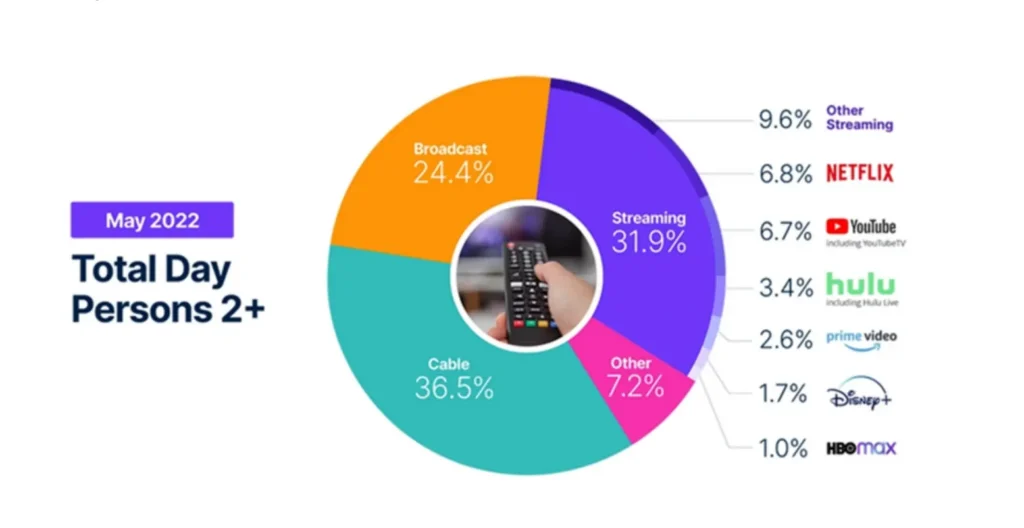
How Netflix’s Entry into Advertising Will Shape the Future of TV Marketing
You see Netflix’s entry into advertising as having broad implications for the TV advertising industry. How so?

What are some of the innovative ways advertisers can make TV ads more effective?
How crucial is interactivity to the future of TV advertising?
Do you see developments like this transforming TV into more of a performance channel?
Social Apps Are Creating a New UX for Local

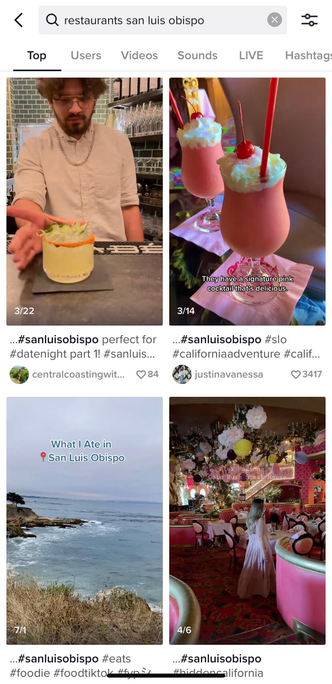
The TikTok experience offers a strong contrast to traditional local search. Google Search and Maps convey information first, and experience, if at all, second. Google is clearly acting on its demographic research to try to push local search in a more visual, immersive direction; but in typical Google fashion, the company’s approach to a visual interface is based on cutting-edge information technology. Google uses its Vision AI to analyze the content of images, pulling photos from its GBP galleries when they match the intent of a text query.
TikTok, on the other hand, proceeds from an assumption that the information is out there if and when you need it but is not particularly interesting. Discover a new local eatery on TikTok, and you can later use Google Maps to figure out how to get there or whether they’re open on Sundays; Maps is a needed tool but no longer the star of the show.
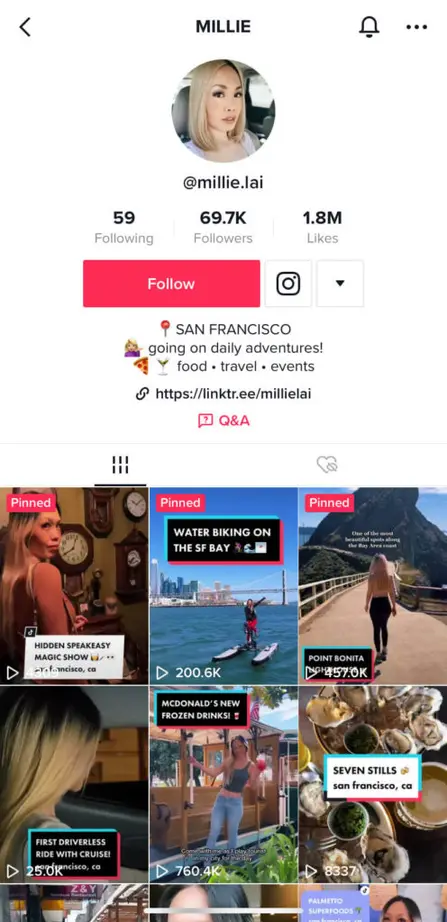
Most of the content related to San Luis Obispo was uploaded to TikTok by people who seemed to be ordinary users, each with a modest follower count. But when I tried the classic local search query “sushi San Francisco,” I saw something else entirely — local content creators with massive followings and dozens of videos covering area eateries, bars, outdoor spaces, and things to do.
One of these influencers, who goes only by Millie and whose TikTok handle is @millie.lai, has nearly 70,000 followers; her content has generated 1.8 million likes. This in contrast to the San Francisco area account of The Infatuation, a popular restaurant recommendation site, which has fewer than 5,000 followers and only about 35,000 likes on TikTok.
The well produced but still personable videos posted by @millie.lai seem representative of a new entry point for local search and discovery that upends the information-first models of both the traditional directory and the modern navigation app, in favor of immersive content that is image-heavy and data-light.
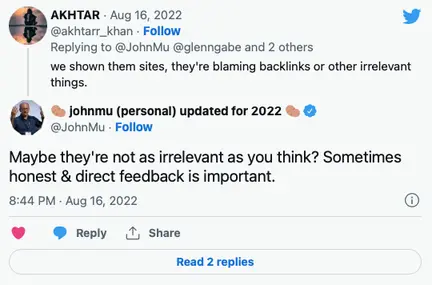
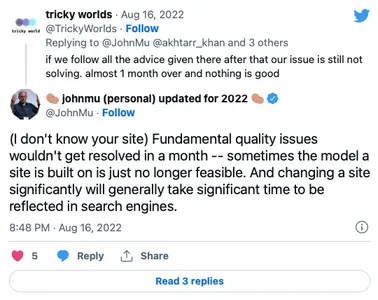
Google’s John Mueller explained that for some sites, the model and fundamentals the site was built upon are “just no longer feasible.” He explained this when someone asked how long it would take to see recoveries after a Google algorithm update. John said “fundamental quality issues” can take longer than just a month to resolve and sometimes never.
John wrote, “Fundamental quality issues wouldn’t get resolved in a month — sometimes the model a site is built on is just no longer feasible.” “And changing a site significantly will generally take significant time to be reflected in search engines,” he added.
Earlier he wrote that “Maybe they’re [the websites] not as irrelevant as you think? Sometimes honest & direct feedback is important.”
It is hard to say a site you’ve been working on is no longer feasible from the model it was built on but sometimes that is true… So yea, we know quality changes take months for Google to pick up on and trust going forward. And yes, some business models are simply no longer relevant and thus probably should not be ranking anymore. So sometimes, yea, you need to step back and look at your site objectivly. Easier said than done…
Google: The Model Your Site Was Built On Is No Longer Feasible